


Enlarge Text
Community Banking — Average Citizens Ensure Public Trust in Genetic Research
People rely on banks to safeguard their assets. Enrollees in gene banks are no different, especially when it comes to the very personal “deposit” of their DNA and other confidential health data.
The trust of the some 11,000 people enrolled in the NUgene Project, Chicago’s first gene bank established a decade ago by Northwestern University Feinberg School of Medicine’s Center for Genetic Medicine, rests, in part, in the hands of a small band of average folk. Members of NUgene’s Community Advisory Committee (CAC), these Chicagoland residents—some patients of Northwestern-affiliated institutions and others who are simply interested citizens—provide a lay public’s point of view to NUgene. Similar to other biorepositories, NUgene solicits community feedback for a deeper understanding of the public’s take on the purposes and need for genetic research. Once the stuff of science fiction, the new reality of uncovering genetic links to common diseases such as cancer, diabetes, and heart disease to enhance diagnosis and treatment has people from all walks of life excited about the possibilities.
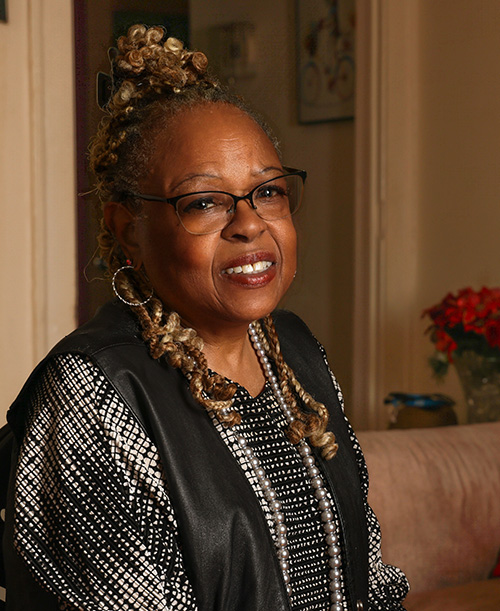
“I believe the least costly, quickest, and most effective solutions to health challenges will come from research involving DNA and other materials from humans,” says CAC member Gretchen Chlebowski of Lincolnwood, Illinois, who worked for many years in the IT department of a large Chicago law firm. “Treatment tailored to specific individuals based on genetic makeup will be more effective and produce fewer side effects than current therapies. More lives will be enhanced and saved.”
The complexity of genome-wide association studies (GWAS) can stymie even the most seasoned of biomedical investigators. But the issues that arise from using banked human DNA—from privacy to commercialization—can raise ethical, social, and legal red flags that most people can grasp. Established in 2004, the CAC offers a non-academic perspective critical to biobanks that depend on recruiting from diverse populations within their immediate communities. Explains NUgene Project director Maureen E. Smith, MS, CGC. “Although we receive guidance from Northwestern leaders in research and medicine, we created the CAC because we wanted to obtain input about potential concerns from the general, and not only the scientific, communities.”
It’s a draw
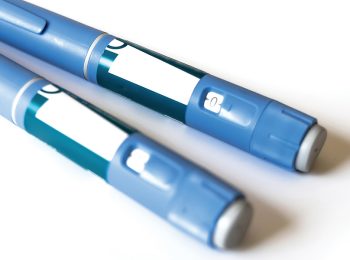
Just a tablespoonful of blood may help health care go further down the road to personalized medicine or, at the very least, fulfill one of the key requirements of participating in the NUgene Project. One 10 ml tube of blood could be used in as many as eight to 10 studies a year. Although this one-time donation may not seem like a lot to ask in the scheme of future medical advances, any collection of blood involves a needle stick.
“One of our major stumbling blocks to recruiting new participants is the blood draw,” says Sharon Aufox,MS, a genetic counselor and research coordinator for the NUgene Project. “Many people are reluctant to have their blood drawn just to provide us with a sample.”
With the NUgene study from its inception, Aufox routinely used to “cold call” patients in waiting room areas on the medical center campus. This sales pitch generated a success rate that hovered around 30 to 40 percent. The project now targets new recruits in specialty medical clinics such as for diabetes or rheumatologic disorders. Already scheduled to have their blood drawn as part of their exams, these patients usually don’t mind giving an extra little bit more for medical research. In this environment, NUgene achieves an 80 to 90 percent participation rate.
In the beginning, the Community Advisory Committee focused on the marketing and outreach efforts of the young NUgene and gave feedback on patient-oriented materials. As the study has matured, so have the topics it has presented to the rotating group of 12 members who meet one or two times a year. “Initially we thought of ways to spread the word and get people involved,” recalls CAC member and NUgene participant Karla Stone of Winnetka, Illinois, who has a nursing background. “Now we’re given complex problems or situations and asked to provide our best thoughts that hopefully guide the project in its decision-making.”

The NUgene Community Advisory Committee of 12 includes volunteers Karla Stone, Beth Marek, and Gretchen Chlebowski.
Informing the informed?
The NUgene consenting process makes it clear to participants that they will not benefit directly from their enrollment in the DNA biorepository. Additionally, the project de-identifies all samples and health data it provides to researchers to protect the anonymity of enrollees. But what if research revealed important genetic information that could make a difference in the health outcome of an individual? Should NUgene allow the return of research results if they show medical utility? Would it be unethical not to disclose this knowledge? Somewhat of a conundrum for biobanks from a purely logistical standpoint, this ethical quandary has engendered much ongoing debate among the CAC members. Stone, for example, changed her position on the subject several times as she mulled over the pros and cons.
“At first, we were presented with a vague concept. Then later they identified the gene and its link to a specific disease,” details Stone. “That really put a face on it for me. I thought what if that were me. Wouldn’t I want to know if I were a carrier of disease? However, on the other hand, genes are so incredibly complex, and medical science doesn’t always know the meaning of gene interactions and how or if they will affect people. So then I thought maybe not. Given our discussions, we could see the tough decision-making that arises for researchers.”
Ultimately, Stone came to a conclusion that works for her. Says this CAC member, who served as a NUgene community representative at a meeting of the national Electronic Medical Records and Genomics (eMERGE) network in Bethesda, Maryland, last July, “Maybe going forward, some consideration should be given to unblinding results if it is definitively known that the information could really help someone.”

Maureen E. Smith, MS, CGC, assistant professor in the NUCATS Institute, is director of the NUgene Project.
Big Brother Concerns
Scleroderma. Aneurysms. Polycystic Ovary Syndrome. These health conditions are only a sampling of the studies conducted by Feinberg School investigators who have used the resources of NUgene. While Northwestern’s biobank certainly advances the genetic research of basic and clinical scientists on campus, it also contributes to much broader efforts. NUgene deposits data into the National Institutes of Health’s (NIH) centralized repository known “dbGaP” (the database of Genotype and Phenotype). The government-controlled dbGaP encourages easier access to genetic data sharing around the country that will allow for the development of more comprehensive genetic studies.
Although seemingly benign, Northwestern’s participation in dbGaP became a hot topic of discussion for the CAC. Some members had little faith in the government to appropriately manage the genetic information, recounts CAC member Beth Marek. “People were either for it or against it. There was no middle road,” says this director of community and global outreach for Old St. Pat’s church in Chicago. “Personally I am for sharing information among different research groups. The bigger the pool of information, then maybe investigators can find answers to health problems more quickly.”
In addition to questioning dbGaP’s intentions, the CAC requested non-commercial use of NUgene data. “The stewardship of the samples was a critical issue,” explains Smith, assistant professor, NUCATS, who has studied public and biobank participant attitudes toward genetic research participation and data sharing. “The committee members had a strong conviction that their samples were given altruistically to help people and profits shouldn’t be made off of their donations.”
Although only advisory in nature, CAC’s opinion on commercialization made a distinct impression on NUgene’s governance in the case of dbGaP. “We included not-for-profit use as one of our restrictions for the NIH,” says Smith. “This request was so clear from the committee, that we felt that we had to respect it—and we did.”