
Enlarge Text
New Drug Could Treat Alzheimer’s, Multiple Sclerosis, and Brain Injury
A new class of drug developed at Northwestern University Feinberg School of Medicine shows early promise of being a one-size-fits-all therapy for Alzheimer’s disease, Parkinson’s disease, multiple sclerosis and traumatic brain injury by reducing inflammation in the brain.
Northwestern has received patents to cover the new drug class and has licensed the commercial development to a biotech company that has recently completed the first human Phase 1 clinical trial.
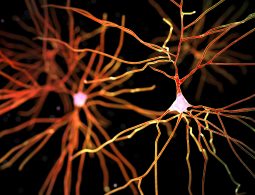
The drugs — represented by MW151 and MW189 — target a particular type of brain inflammation, called neuroinflammation, which is increasingly believed to play a major role in the progressive damage characteristic in these neurological diseases and in traumatic brain injury and stroke.
A new preclinical study published in the Journal of Neuroscience reports that when one of the new Northwestern drugs is given to a mouse genetically engineered to develop Alzheimer’s, it prevents the development of the full-blown disease. The study, from Northwestern’s Feinberg School and the University of Kentucky, identifies the optimal therapeutic time window for administering the drug, which is taken orally and easily crosses the blood-brain barrier.
“This could become part of a collection of drugs you could use to prevent the development of Alzheimer’s,” said D. Martin Watterson, PhD, a professor of molecular pharmacology and biological chemistry at the Feinberg School, whose lab developed the drug.
MW151 and MW189 work by preventing the damaging overproduction of brain proteins called proinflammatory cytokines, which scientists now believe contributes to the development of many degenerative neurological diseases as well as to the neurological damage caused by traumatic brain injury and stroke.
INHIBITS MULTIPLE SCLEROSIS DEVELOPMENT
In M.S., overproduction of the proinflammatory cytokines damage the central nervous system and the brain. The proteins directly or indirectly destroy the insulation of the nerve cells that transmit signals down the spinal cord. When the insulation is stripped, messages aren’t properly conducted.
When mice that were induced to develop an M.S.-like disease received MW151 orally, they did not develop disease as severe.
“We inhibited the development of the disease,” said William Karpus, PhD, the Marie A. Fleming Research Professor of Pathology at the Feinberg School. “Now we need to learn if the drug can prevent relapses.”
PROTECTION AFTER TRAUMATIC BRAIN INJURY
After a traumatic brain injury, the glia cells in the brain become hyperactive and release a continuous cascade of proinflammatory cytokines that — in the long term — can result in cognitive impairment and epilepsy.
In a study with mice, Mark Wainright, MD, professor of pediatric neurology at Northwestern’s Feinberg School and a physician at the Ann & Robert H. Lurie Children’s Hospital of Chicago, showed that when MW151 is given three to six hours after the injury, it blocks glial activation and prevents the flood of proinflammatory cytokines.
“If you took a drug like this early on after traumatic brain injury or even a stroke, you could possibly prevent the long-term complications of that injury, including the risk of seizures, cognitive impairment and, perhaps, mental health issues,” Wainwright said.
******
The study was supported by funds from the American Health Assistance Foundation, an Alzheimer’s Association Zenith award, a gift from the Kleberg Foundation and grants P01 AG005119 and R01 AG027297 from the National Institute on Aging of the National Institutes of Health and R01 NS056051 from the National Institute of Neurological Disorders and Stroke from the National Institutes of Health and S10 RR026489 from the National Institutes of Health.